Project Vittorio Emanuele II
Name and design
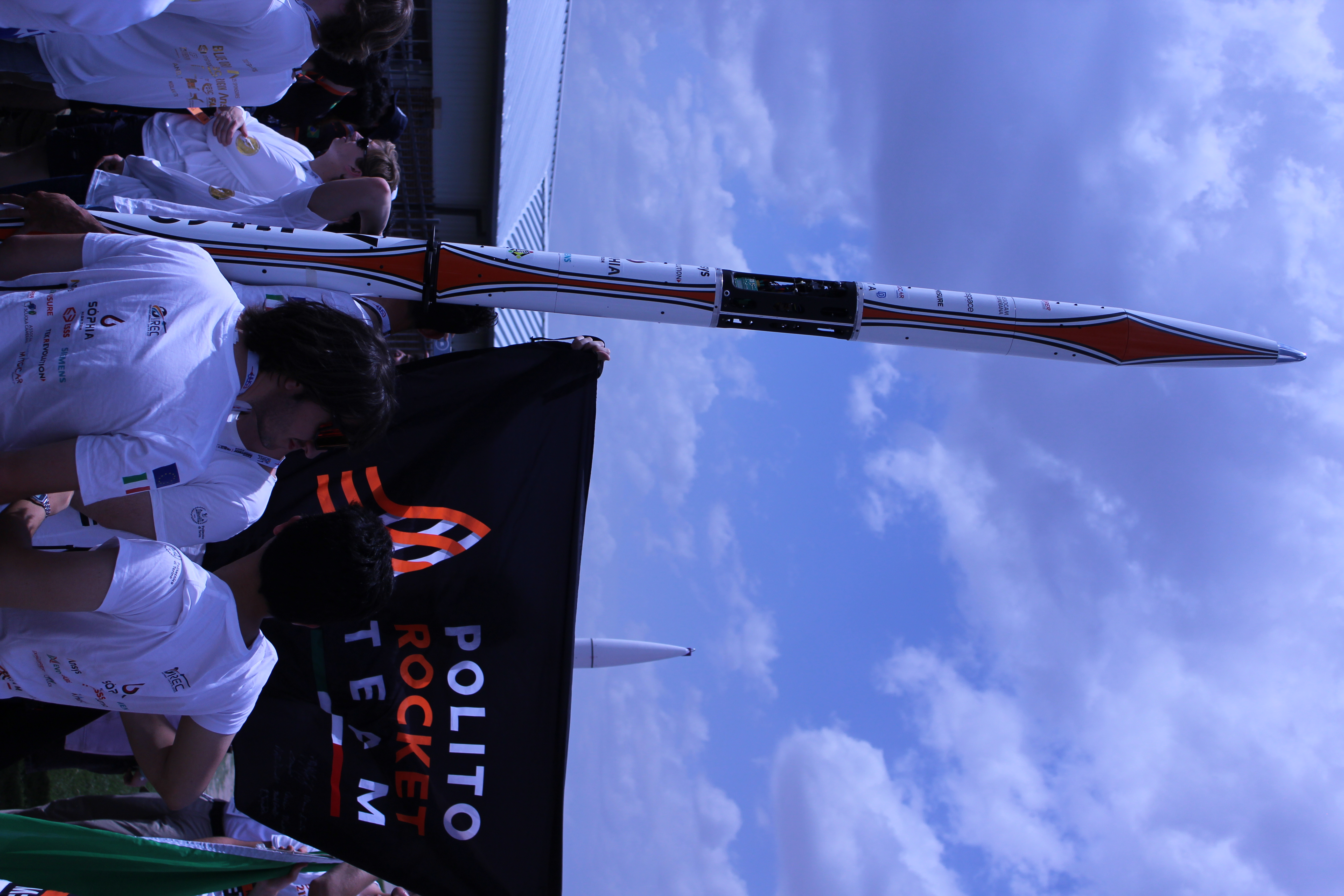
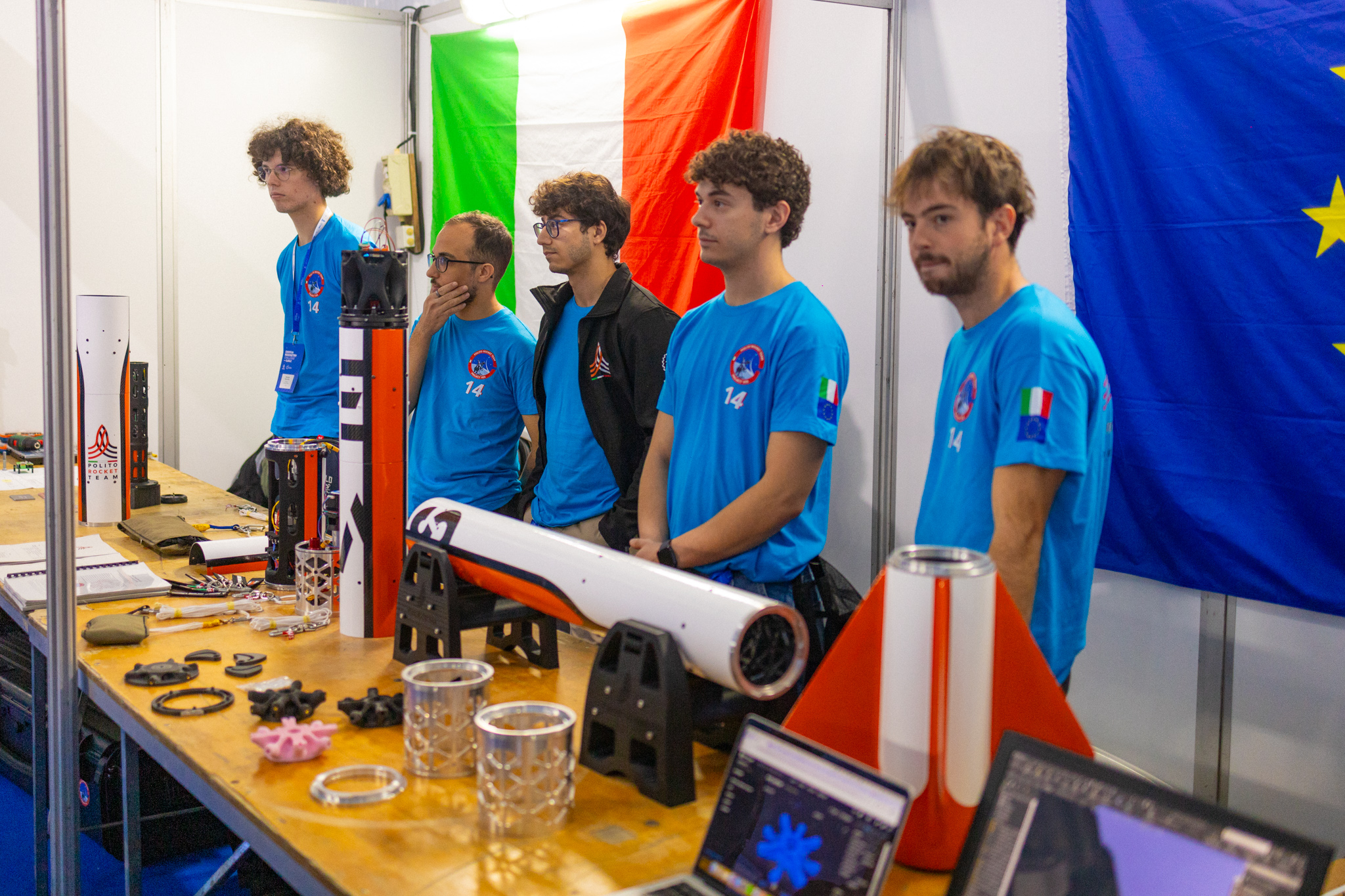
Vittorio Emanuele II, code name VES, is the second rocketry project undertaken by the team.
The project is named after the first King of Italy, born in Turin in 1820. Vittorio Emanuele II, who, although already King of Sardinia and Piedmont, fought tirelessly for a united Italy.
His unwavering determination to never settle for mere accomplishments and always strive for greater heights serves as an inspiration for the second rocket of the Founding Fathers series.
The PoliTo Rocket Team is propelled by this spirit, refusing to rest on the laurels of the remarkable achievements of the Cavour Project. Instead, it developed another rocket specifically designed for international competitions with increasingly challenging objectives.
Technical characteristics
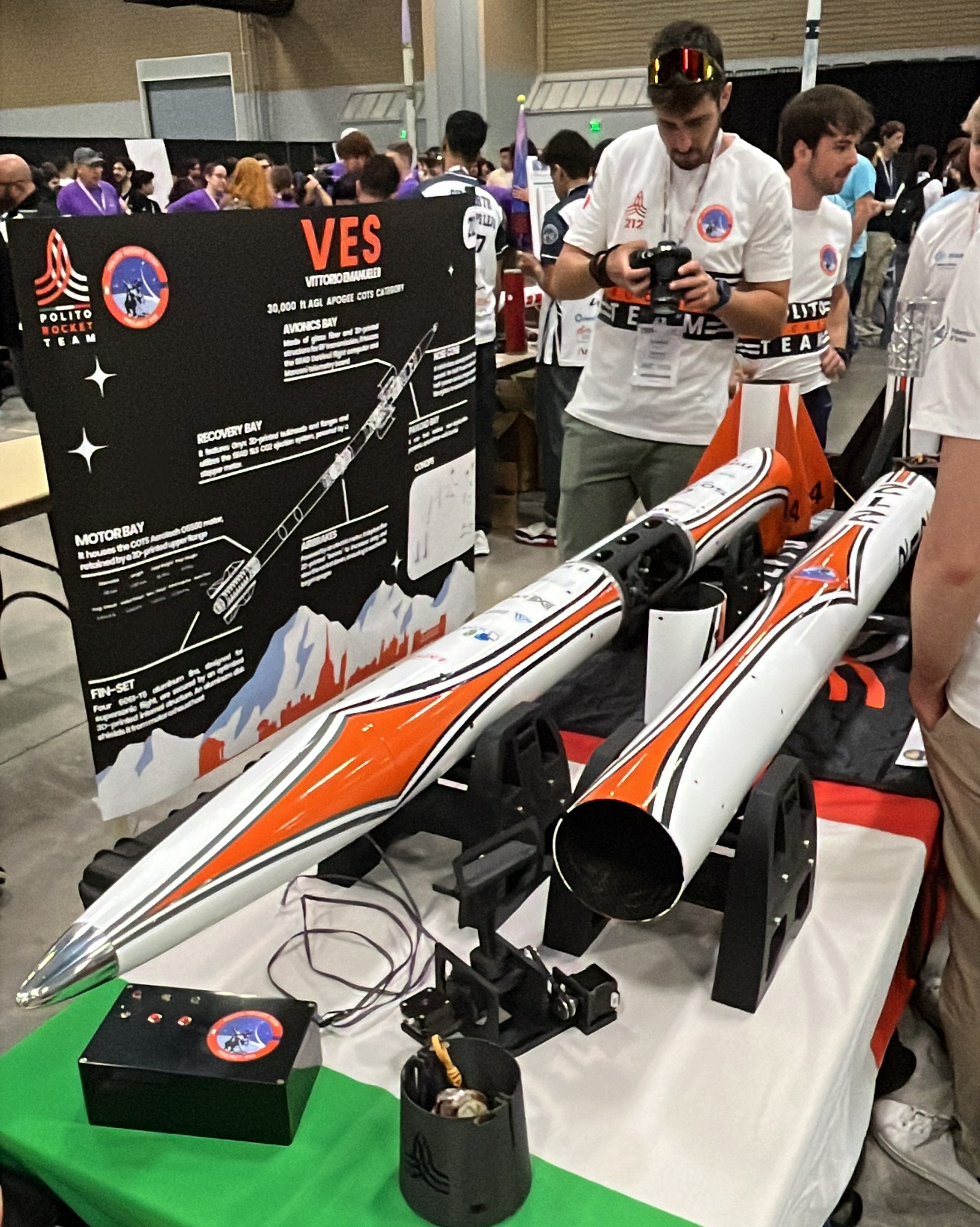
VES is a single-stage rocket featuring a solid Commercial Off-The-Shelf (COTS) motor and an internal diameter of 130mm. A key technical objective of the project is to enable the team to gain hands-on experience in developing Student Researched and Developed (SRAD) onboard systems. These include the ejection recovery system, flight computer, ground station, and, in particular, an airbrakes system.
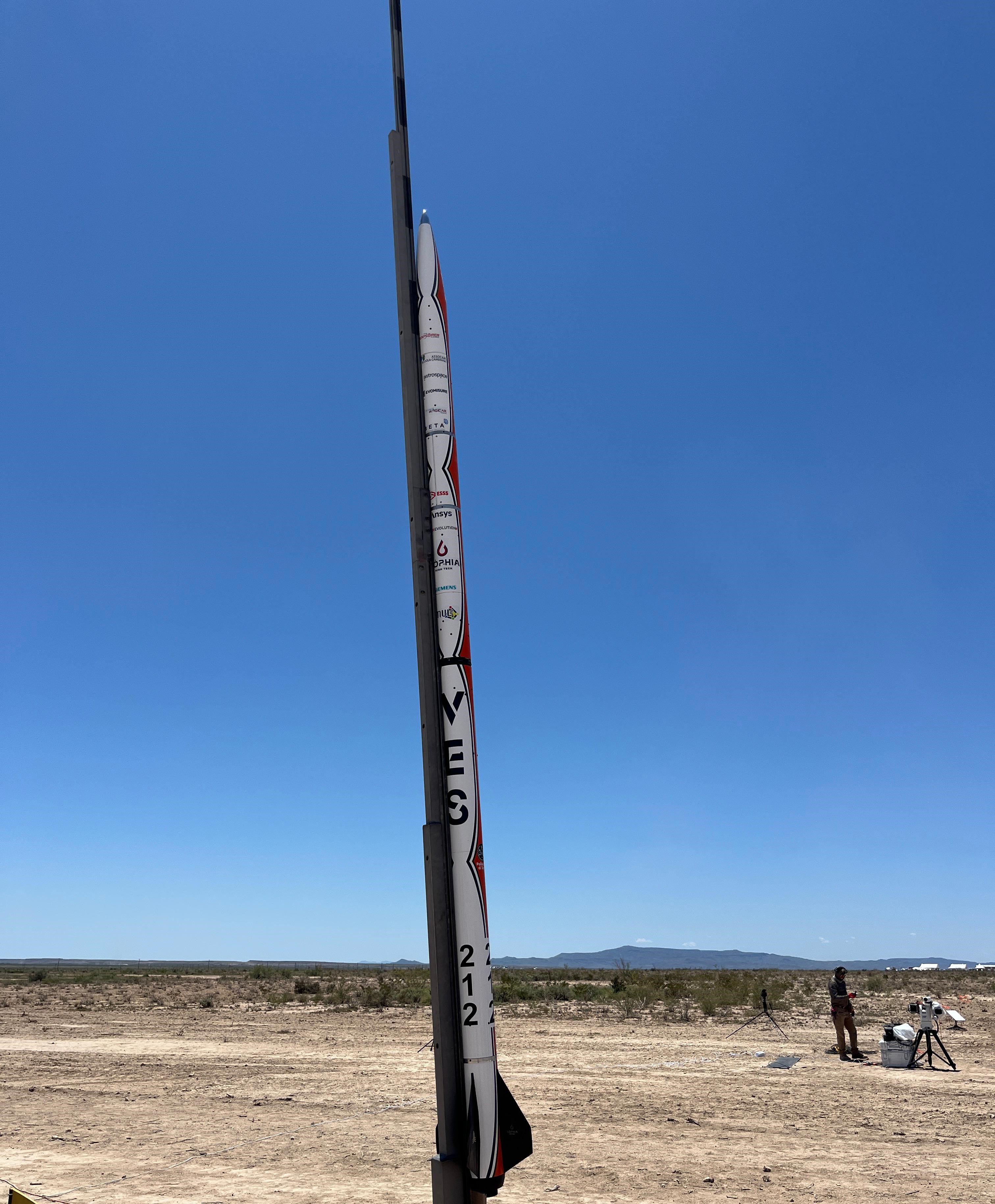
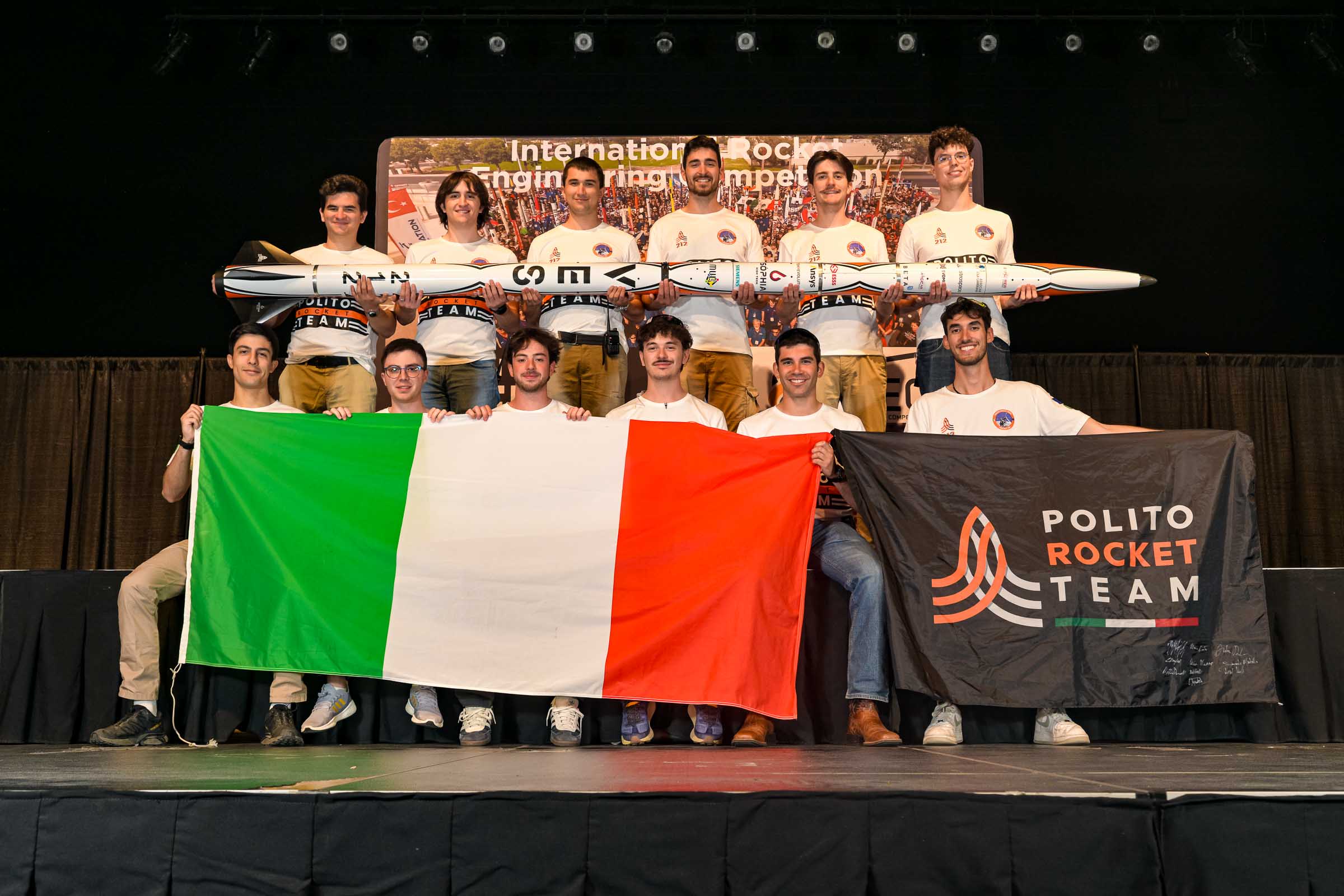
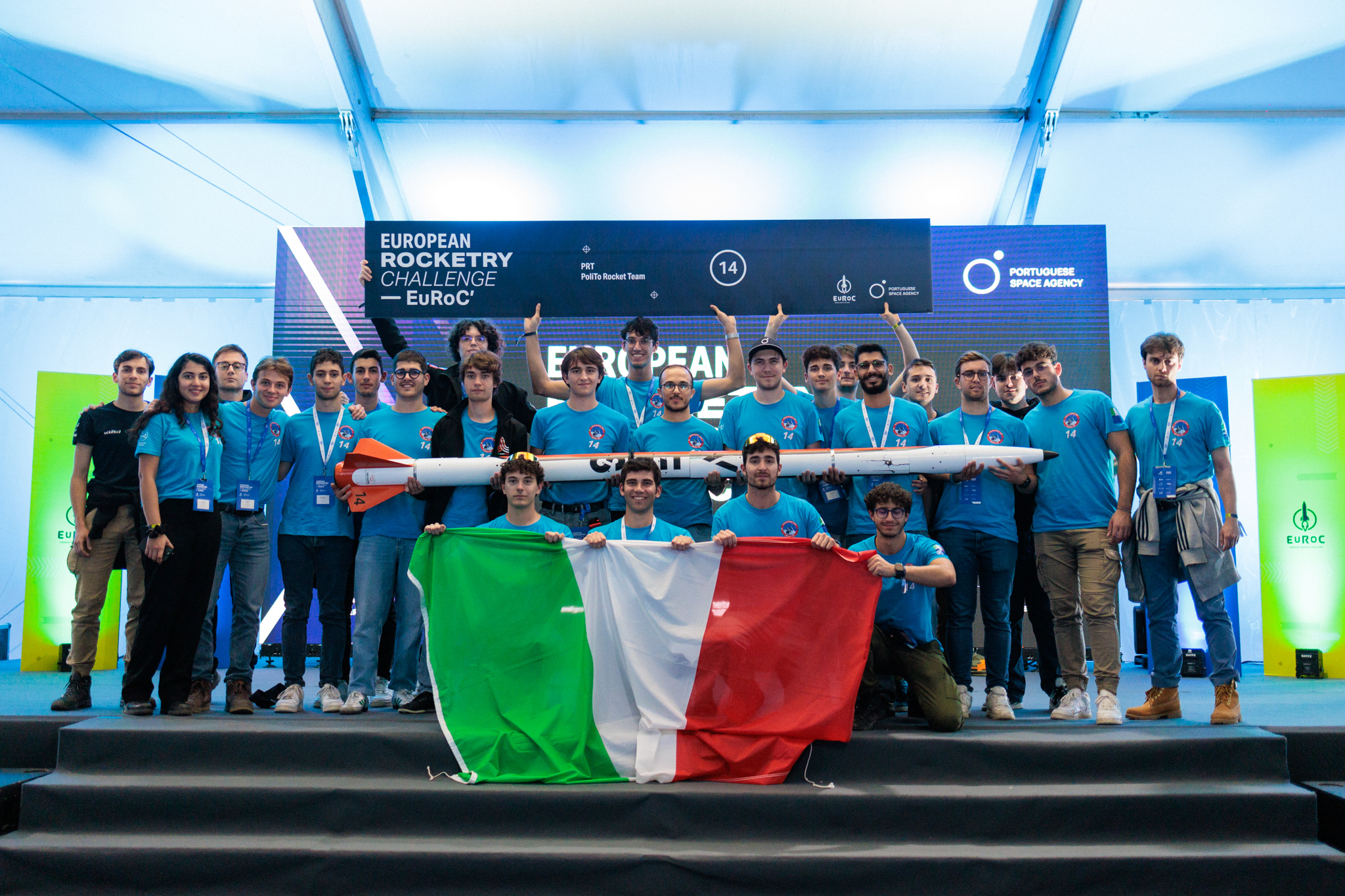
Two versions of the rocket with radical changes have been iterated: the Mark I developed during the 2023-24 academic year and launched at the 2024 European Rocketry Challenge with a 3000m apogee, and the supersonic Mark II version, developed during the 2024-25 academic year for the International Rocket Engineering Competition 2025 with a target apogee of 9000m.
A configuration of the VES rocket was designed for a test campaign conducted at the ASK 't Harde range in the Netherlands, scheduled a month before the European competition. Conducted in collaboration with the Delft Aerospace Rocket Engineering team, the campaign provided invaluable guidance and facilitated the resolution of critical design flaws.
Versions
Launch History
European Rocketry Challenge
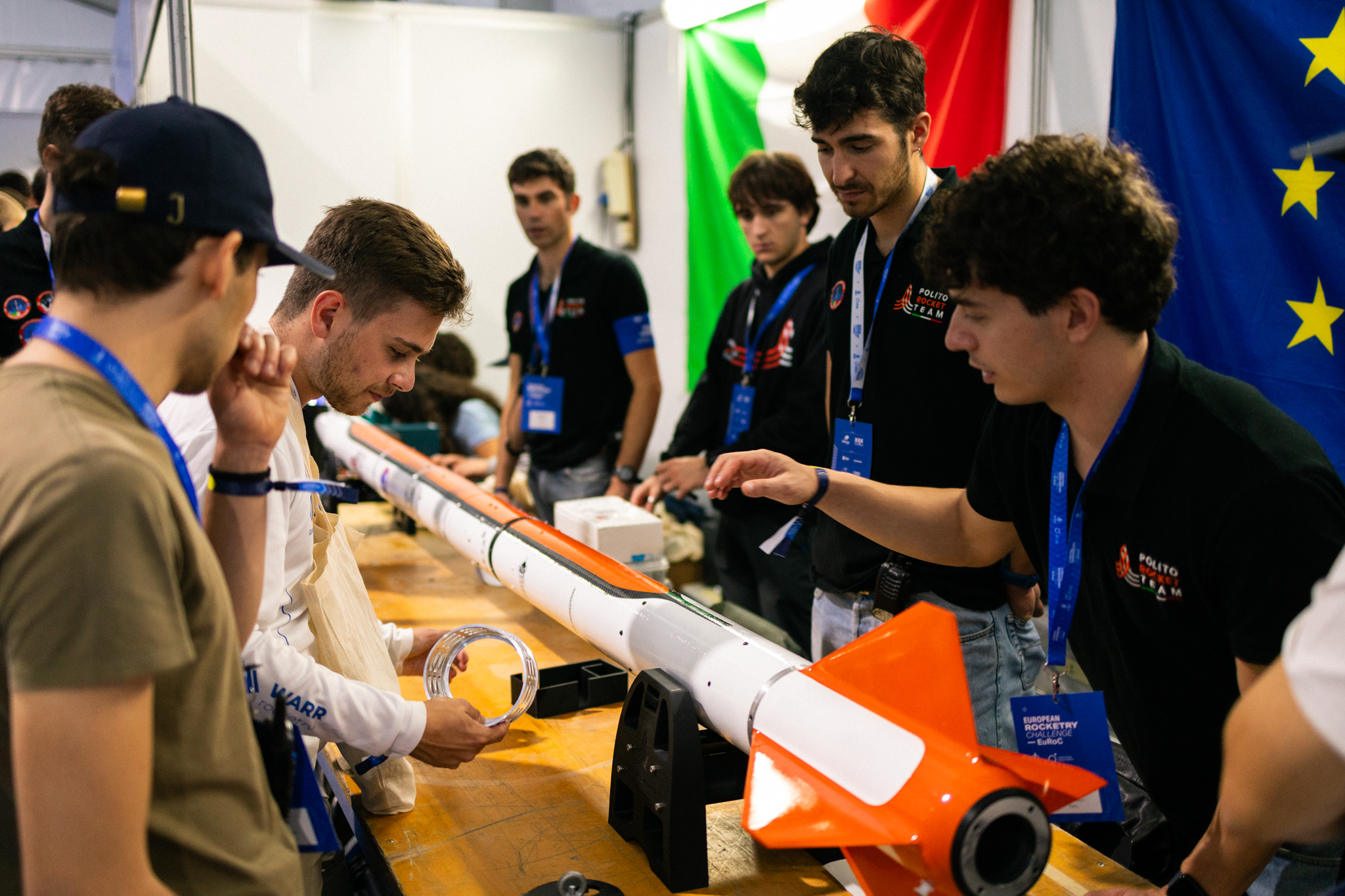
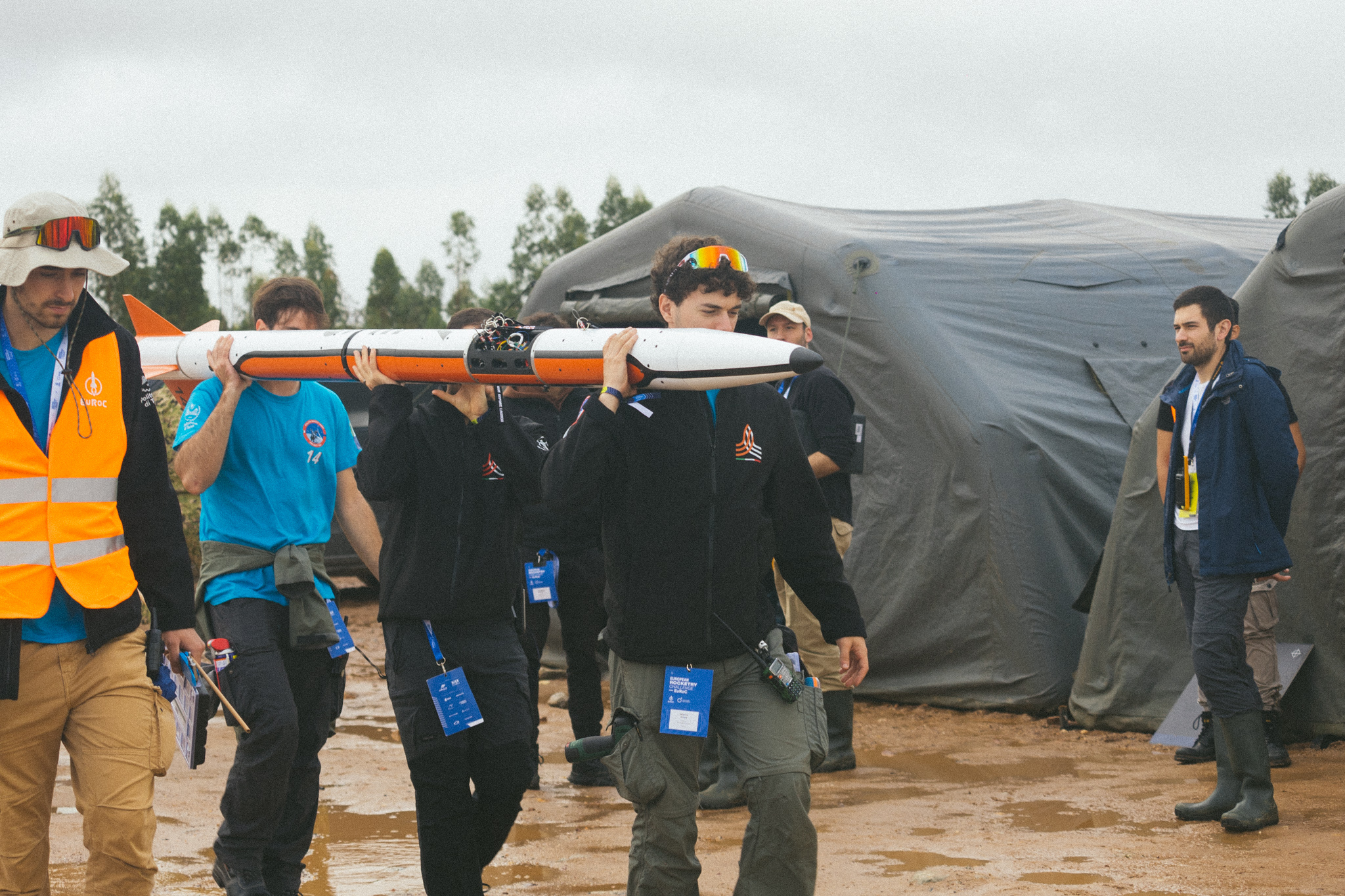
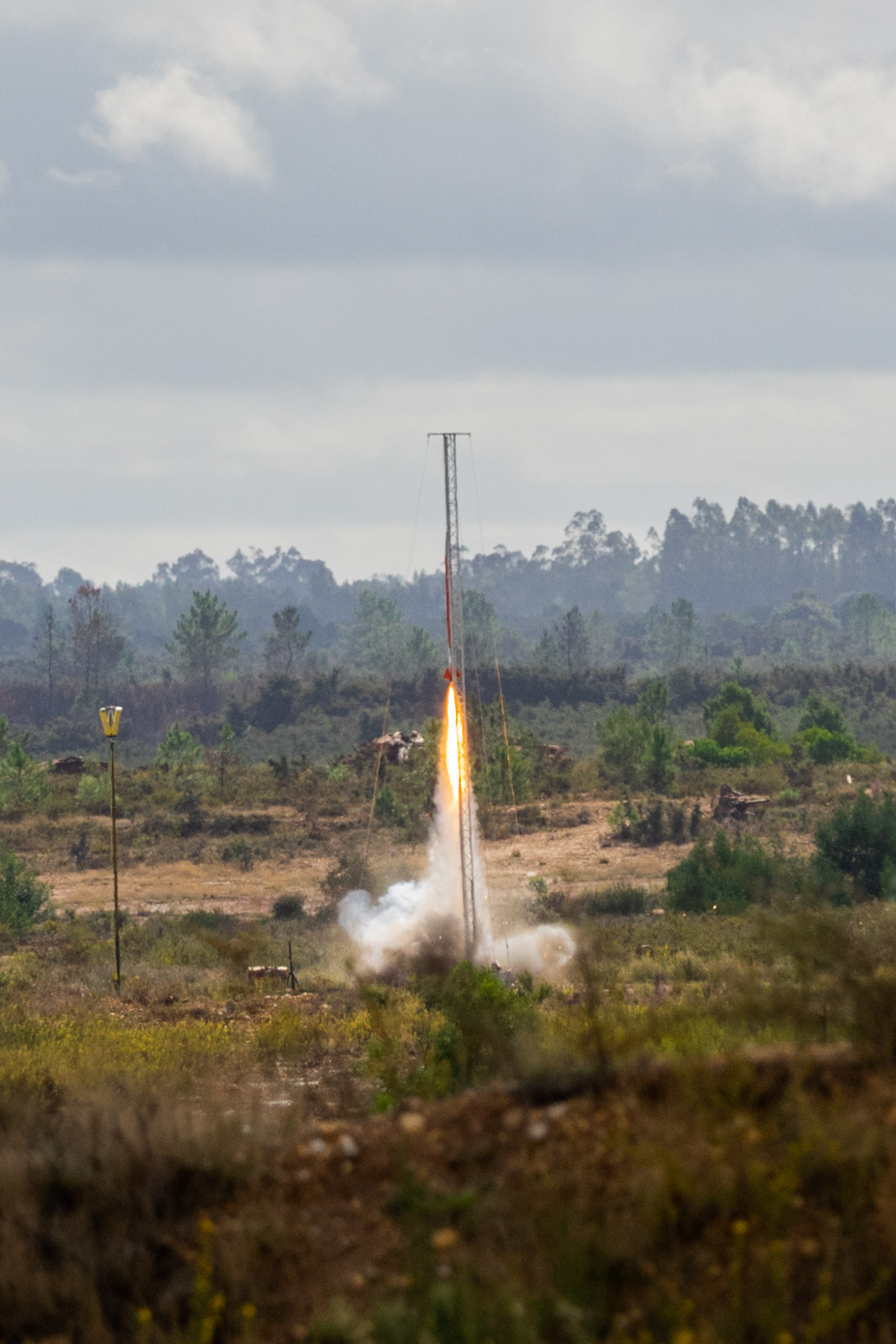
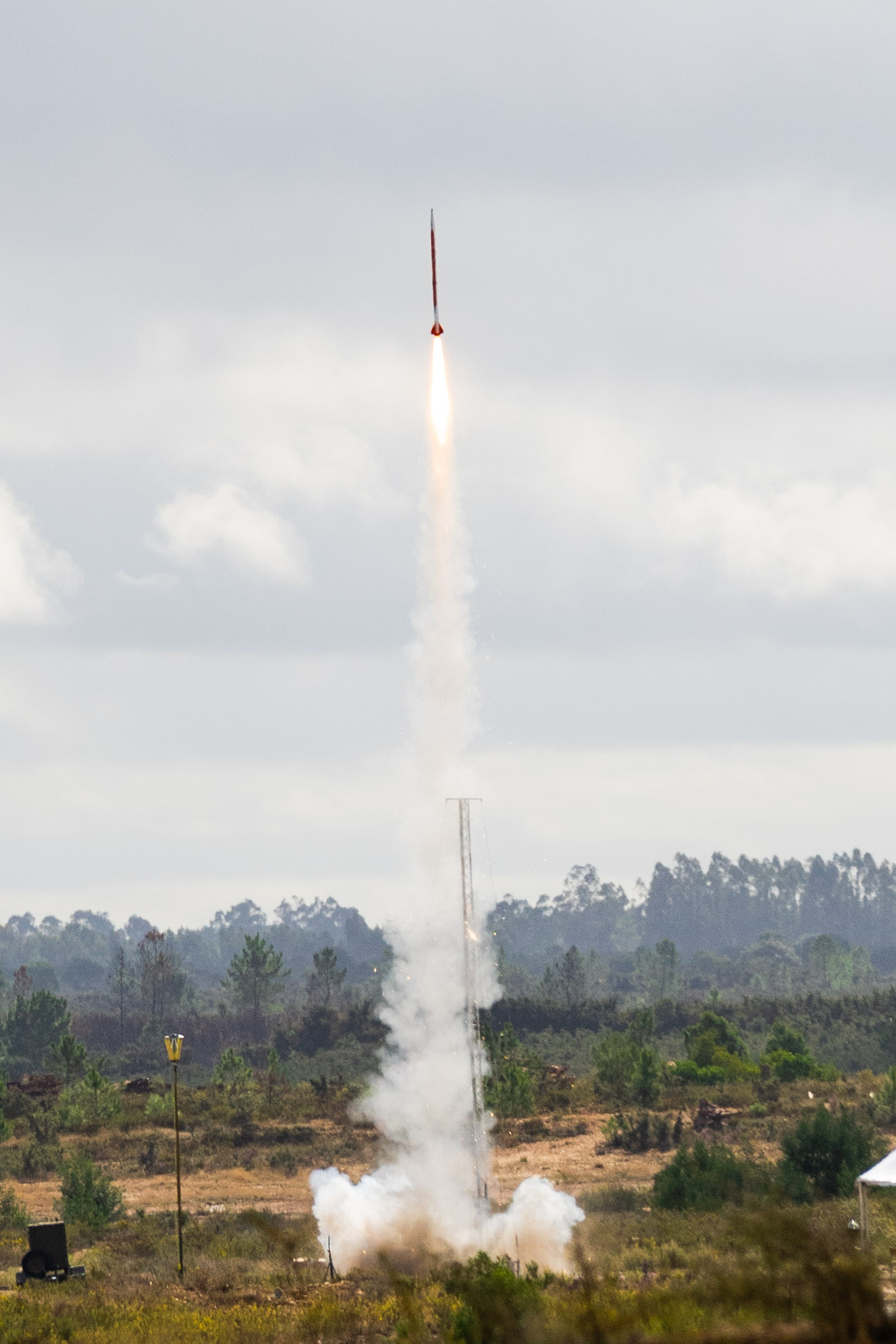
October 12, 2024VES Mark I was launched on October 12 at 14:19 (UTC+1) at Santa Margarida Military Camp, Portugal. The flight was nominal, reaching an apogee of approximately 3160m with a maximum speed of 259m/s and a maximum acceleration of 8.5G.
The drogue parachute deployed, reducing the rocket’s descent velocity to about 30m/s. The main parachute separation was successful; the parachute did not have enough time to fully inflate due to a failure in the drogue system’s shock cord. As a result, the rocket split into two sections for recovery, each equipped with a parachute. VES returned home with some minor airframe damage but was ready for future launches.
The project secured 6th place out of 25 European teams participating and finished second in its flight category.
International Rocket Engineering Competition
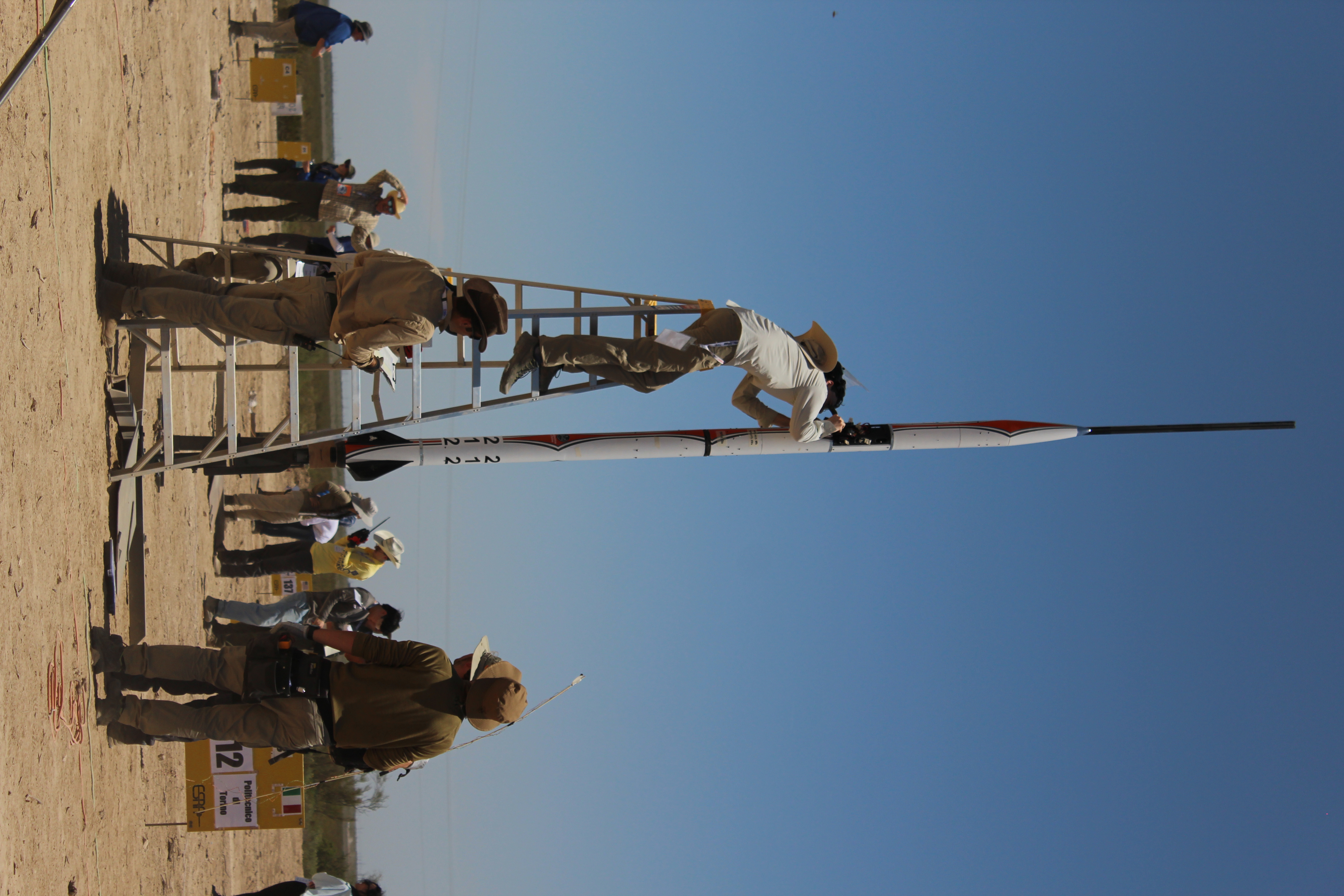
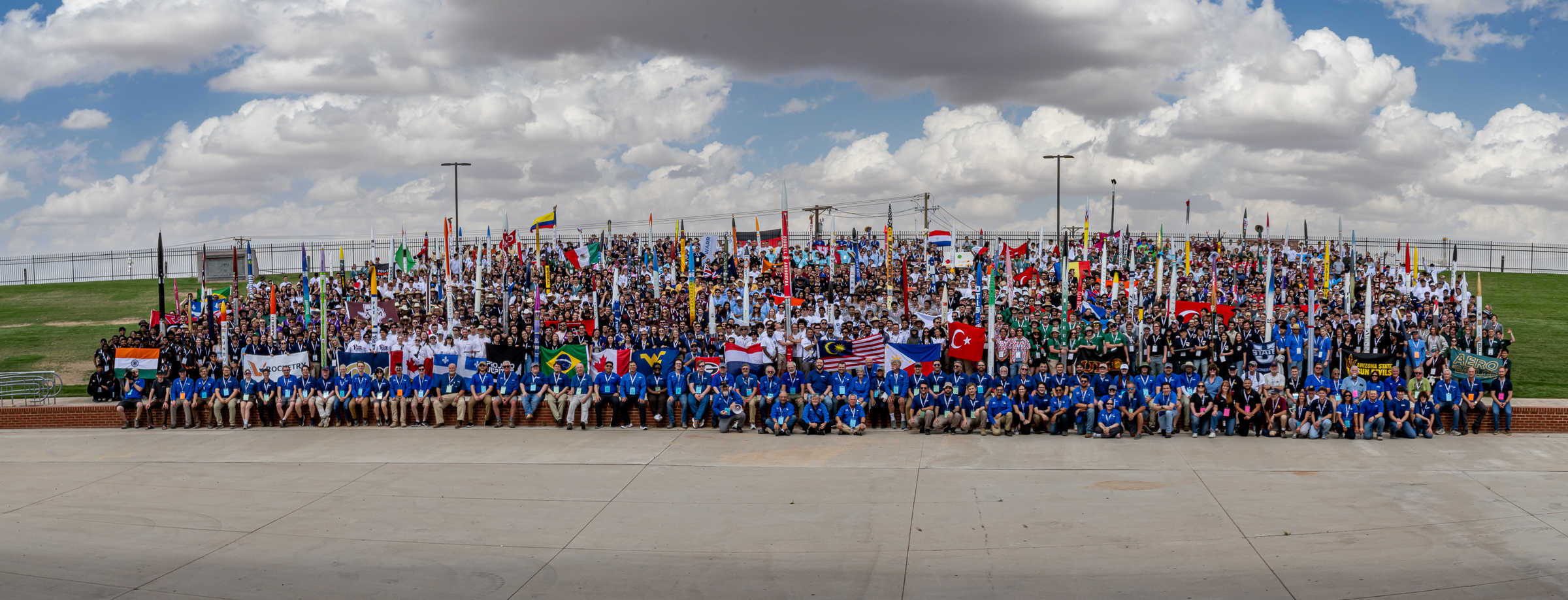
July 13, 2025On July 13th, 2025, in Midland, Texas, VES Mark II attempted its supersonic launch targeting 9000m. Unfortunately, a CATO (Catastrophic Aborted Take-Off) occurred after ignition due to a malfunctioning COTS motor, likely stemming from a manufacturer's defect.
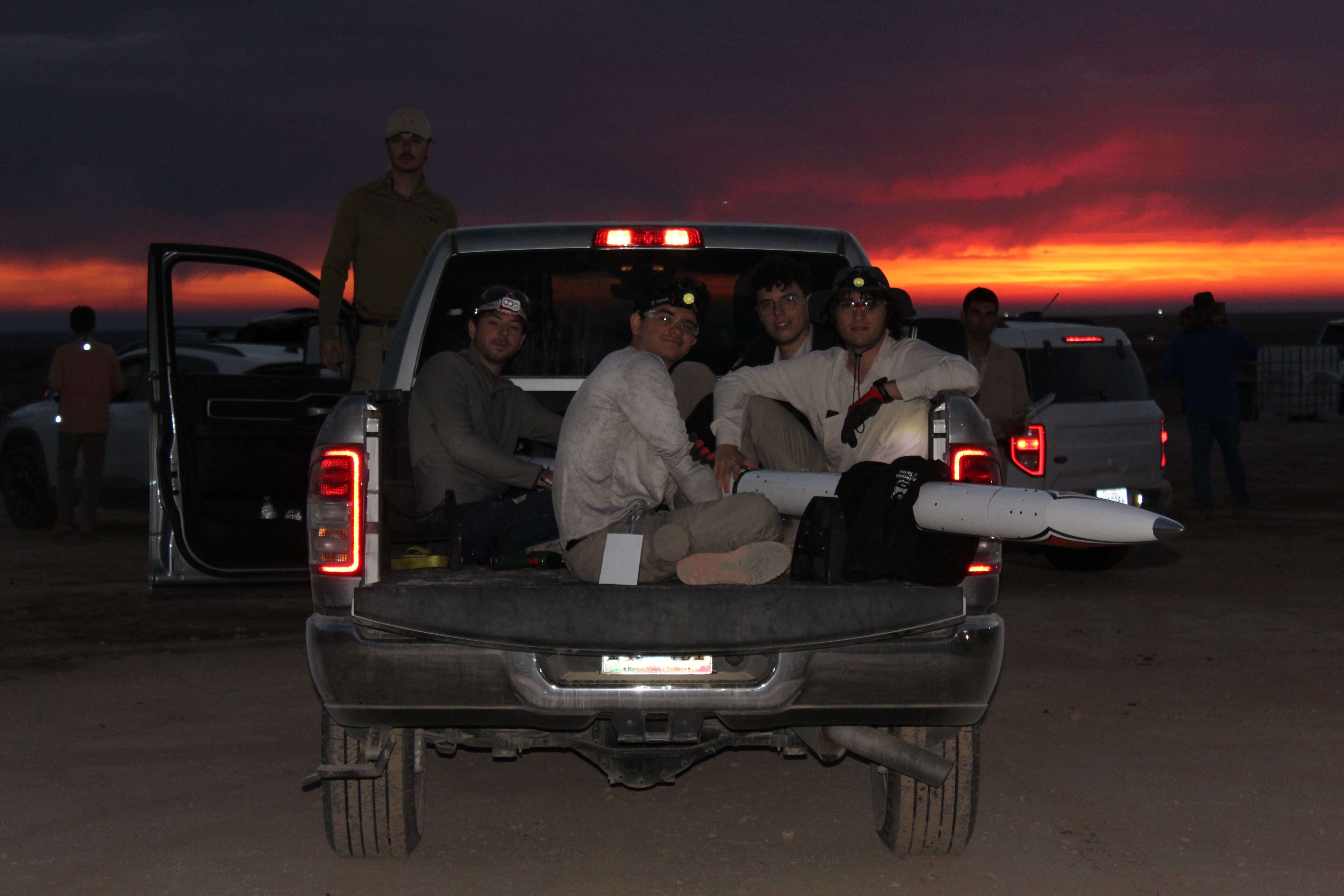
VES used a COTS O5500X-PS motor from Aerotech. The failure was traced to the epoxy used to seal the motor’s forward closure, which didn't contain internal pressure, ejecting it together with a grain of propellant into the rocket’s interior. This damaged the upper motor retention flange and the section of the body tube it was attached to. Despite the failure, most of the rocket was recovered in excellent condition, including the avionics, recovery systems, parachutes, nose cone, upper body tube, and mechanical interfaces.
The solidity of the project was still demonstrated by an exceptional 1st place in the "Design and Build Quality" category, as well as a 16th place for the project's Technical Report submitted, out of over 140 participating universities.